
- Search
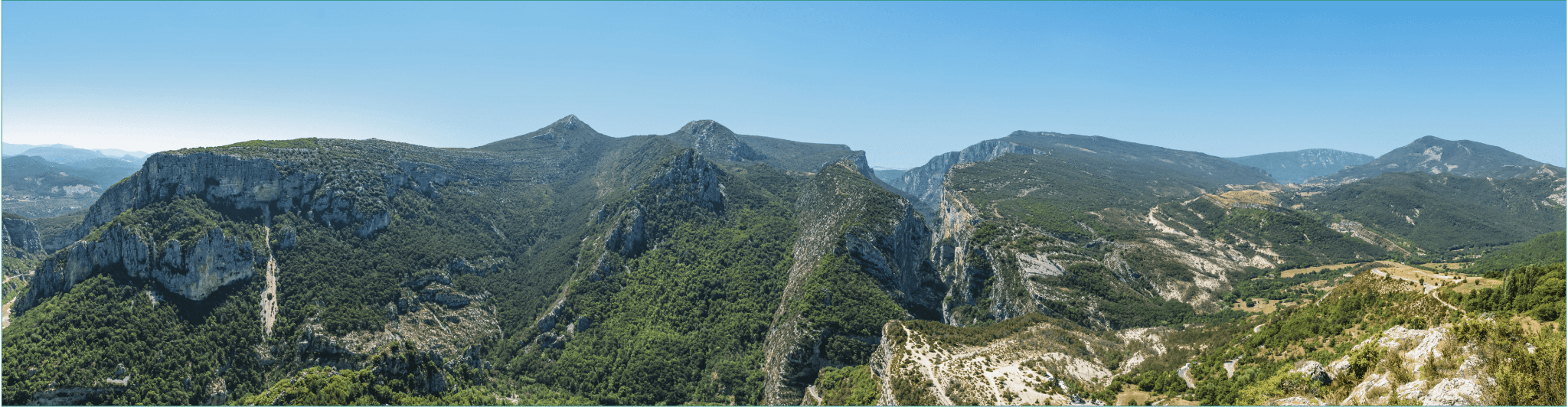
From the Charvet mountain, a magnificent panorama unfolds from Cheval Blanc to the Barre des Dourbes. On the way back, it’s not unusual to spot golden eagles, chamois and black grouse.
The first part of the trail runs under the cover of a chestnut forest and along the “Roman Way”.
Family outing to Europe’s oldest known salt mining site, the Moriez saltwater spring, first developed in the Neolithic period, around 5700 BC.
A beautiful, shady itinerary that takes in the villages of Annot and Le Fugeret and offers magnificent views over the valley, with the option of returning via the Chemins de Fer de Provence.
From the church in Barrême, this tour combines plant and mineral elements on Saint-Jean hill. This viewpoint overlooking the Asse and its tributaries bears witness to the collapse of a limestone cliff during the Tertiary era.
Stroll to the Château Plus Haut, built in the Middle Ages on an eminence south of the village to keep watch over the surrounding area, from the Asse valley to the Col du Corobin.
The Tour du Clap passes through a large pine forest before reaching the ridge. The other slope, also wooded, was once a vast pastoral area used by transhumant herds.
A hike through undergrowth, rich in forest species (black pines, atlas cedars, maples…), it leads to a pass used since prehistoric times to link Saint-Lions to Moriez.
Hike to the foot of Cup Mountain and visit an exceptional volcanic geological site, and stroll through the peaceful Asse Valley.
Located on the Dourbes bar at an altitude of 1,622 m, the Pas de Labaud, like the Pas de Tartonne and Pas de la Faye, has long been used by the inhabitants of the Asse valley to reach the Bléone valley and the Digne-les-Bains region.