Vulture discovery map
Parking
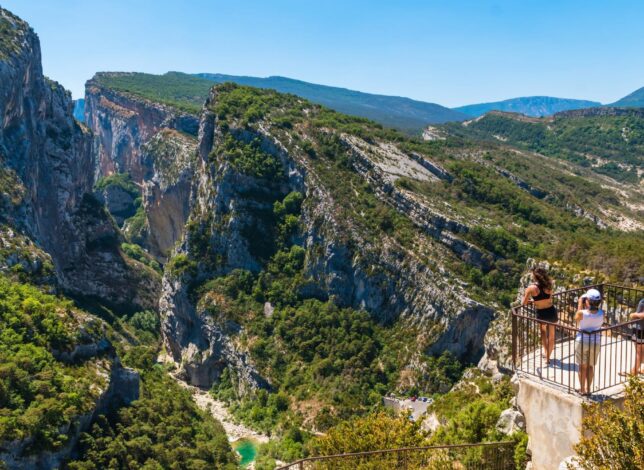
You can park at the various viewpoints along the first section of the Route des Crêtes.


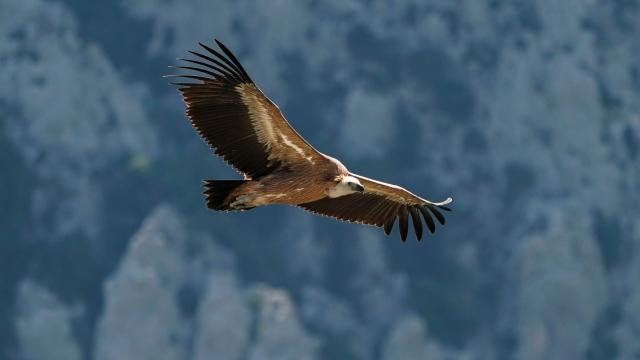
Let yourself be carried away by the synchronised ballet of these giants of the skies.
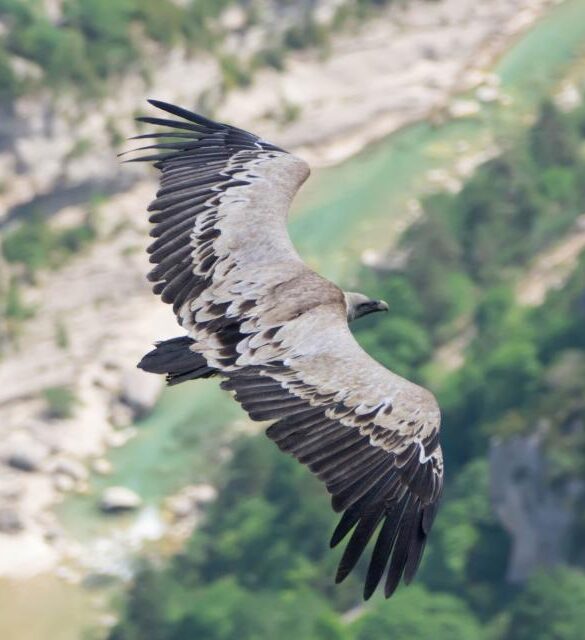
On a walk in the Verdon, you can observe three species of vultures (griffon, cinereous and Egyptian) as well as bearded vultures and their distinctive flight. They soar in spirals in search of favourable winds to travel and find food. Slow, haunting, mysterious, the circling of their shadows glides among the clouds.
This bird of prey, with its long, angular, featherless neck, feeds exclusively on dead animals, earning it the name of “refuse collector of the sky”. Its role as gravedigger long provoked disgust and fear among humans. As a result, vultures fell victim to this poor image, which contributed to their disappearance from Haute-Provence and even from the Alps in the 19th century.
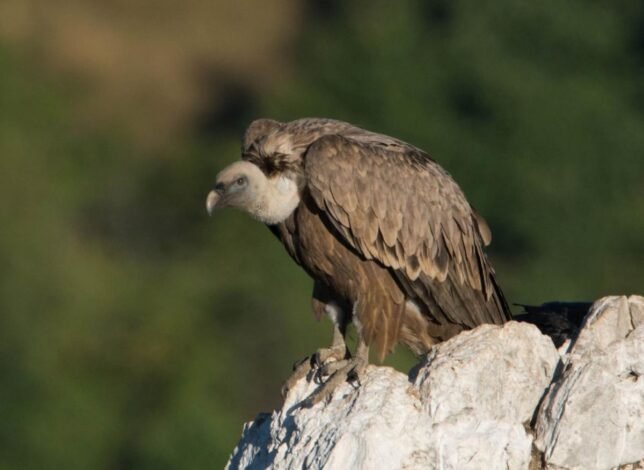
Since 1999, vultures have once again been flying above the Gorges du Verdon thanks to passionate ornithologists and various associations, in particular the LPO (French bird protection league).
There are now more than 300 birds, including around a hundred pairs, taking off from the cliffs of the Gorges du Verdon and ranging over 600,000 hectares.

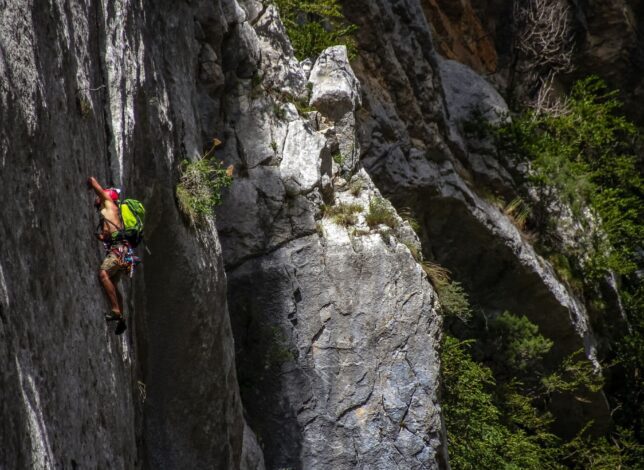
During the nesting season of vultures and other cliff-nesting birds, some climbing routes should be avoided.
Parking
You can park at the various viewpoints along the first section of the Route des Crêtes.
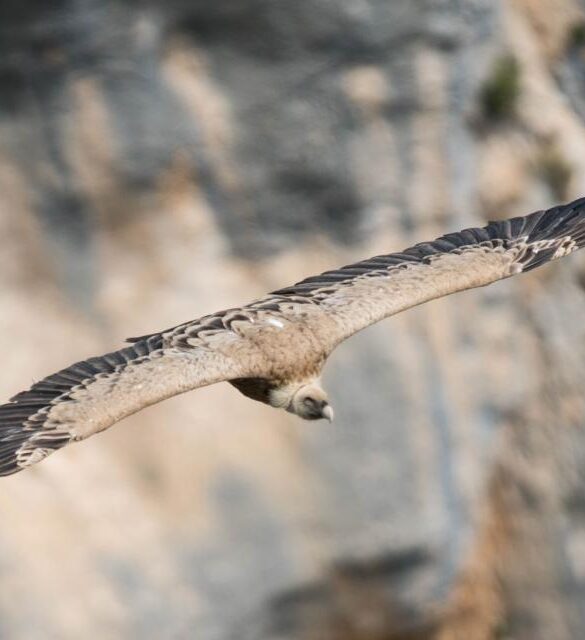
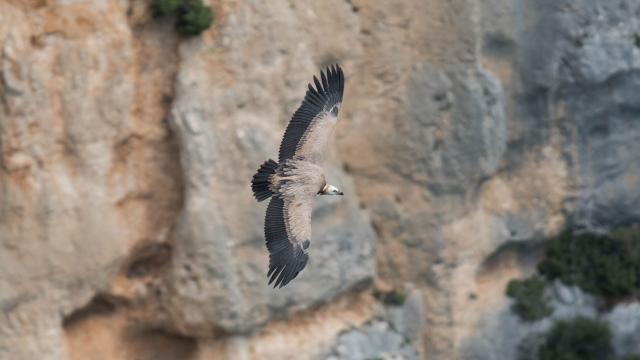
Watching vultures in the Verdon is fairly easy, but patience and discretion are the keys to the magic. Simply take the Route des Crêtes from La Palud-sur-Verdon (partly closed in winter from the Pas de la Baou to the Chalet de la Maline, while the other viewpoints remain accessible), which the birds of prey regularly fly over.
Many viewpoints offer impressive vistas from which you can admire them up close.
But to watch the griffon vulture, his majesty the cinereous vulture and the Egyptian vulture, the go-to spot remains the village of Rougon. On a rock facing the village, some thirty birds scan the horizon. The scene is almost surreal!
The birds of prey wait for the warming air to create thermals so that they can rise into the sky effortlessly. Later in the morning, they set off in small groups in search of food.
They glide for most of the day, especially in the early evening, tracing great circles above the gorges.
Marvel at their skill in hovering motionless amid gusts of wind.
Take in their wingspan. From one wingtip to the other, it can reach up to 2.80 m!
Being lucky enough to see them is a real “Wow!” moment when they pass two metres above your head.
3 good reasons to go vulture watching
Preparing well
Vote for your 3 favourite things to do in the Verdon this season!